
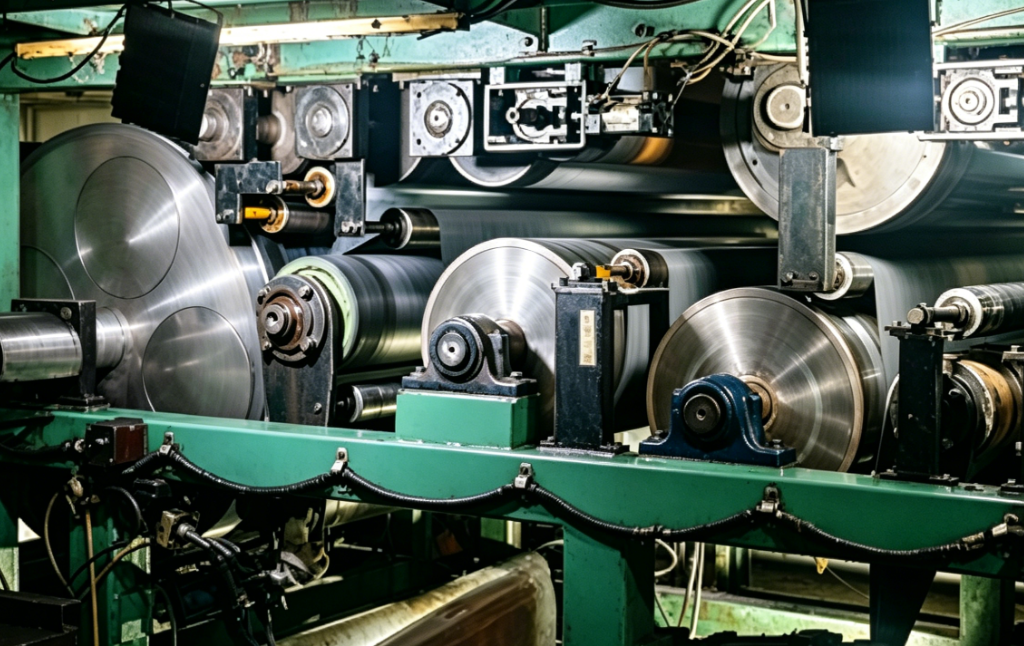
Anyone in the PVC transparent film industry knows that in winter, especially for shipments to northern regions or high-latitude countries, clients’ biggest fear is the film becoming hard, brittle, or even cracking during transit. PVC itself is a polar polymer with a glass transition temperature (Tg) between 75-105°C, which inherently makes it stiff and brittle at low temperatures.
To give everyone a more intuitive understanding of our technical reserves in cold-resistant formulations, the R&D team at TENG YAO New Materials, combined with years of film production experience, systematically reviews the practical pathways for improving the cold resistance of PVC transparent film from four dimensions: resin selection, plasticizer systems, modifiers, and fillers.
1. Resin Selection: Molecular Weight is the “Foundation” of Cold Resistance
In standard formulations, if the goal is simply to handle typical winter climates, we prioritize PVC resins with slightly higher degrees of polymerization and larger molecular weights. The higher the molecular weight, the stronger the Van der Waals forces and entanglement between macromolecular chains, and the more chain segments there are, naturally improving the material’s low-temperature performance.
In standard formulations, if the goal is simply to handle typical winter climates, we prioritize PVC resins with slightly higher degrees of polymerization and larger molecular weights. The higher the molecular weight, the stronger the Van der Waals forces and entanglement between macromolecular chains, and the more chain segments there are, naturally improving the material’s low-temperature performance.
For transparent films with extreme cold-resistance requirements (such as special packaging films or agricultural films that need to maintain flexibility at -30°C), we use high-polymerization resins (average polymerization degree greater than 2,000). This resin has higher crystallinity and crosslinked structure, restricted intermolecular sliding, and enhanced elasticity, fundamentally improving cold resistance.
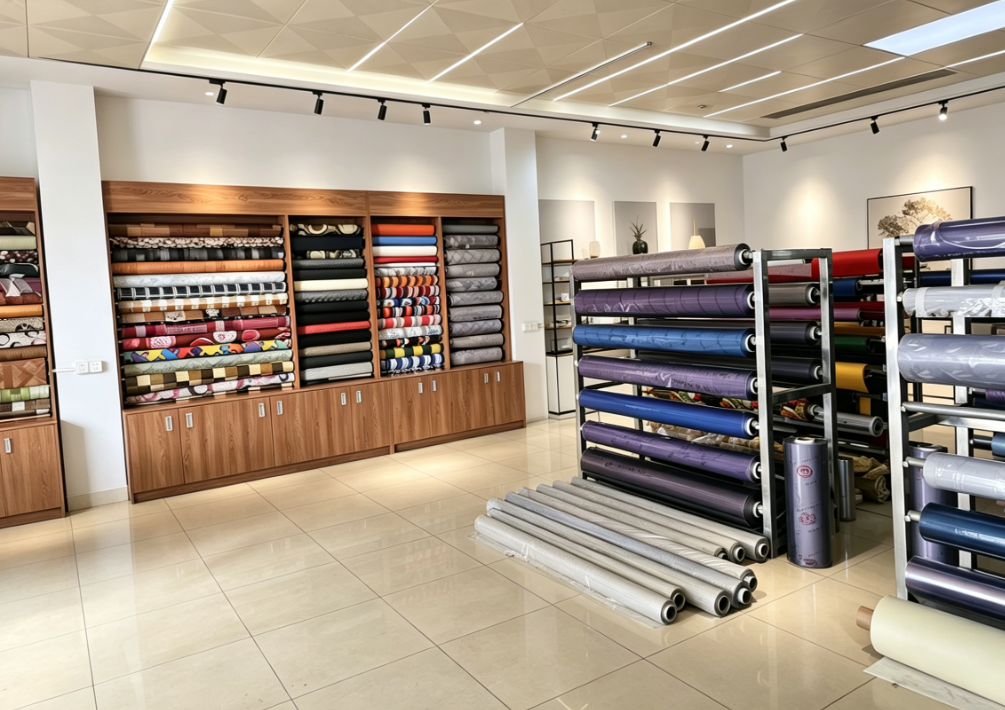

2. Plasticizer System: Choosing the Right “Cold-Resistant Plasticizer” is Key
Plasticizers are the “soul” of soft PVC transparent films. To improve cold resistance, relying solely on primary plasticizers (like DOP) is not enough; cold-resistant plasticizers must be introduced as auxiliaries.
Plasticizers are the “soul” of soft PVC transparent films. To improve cold resistance, relying solely on primary plasticizers (like DOP) is not enough; cold-resistant plasticizers must be introduced as auxiliaries.
The cold-resistant plasticizers we commonly use include:
- DOA (Dioctyl Adipate), DOS (Dioctyl Sebacate): These are the most classic cold-resistant varieties, but their compatibility with PVC is average. They are usually used as auxiliary plasticizers, with dosage controlled at 5%-20% of the primary plasticizer.
- TXIB (2,2,4-Trimethyl-1,3-pentanediol Diisobutyrate): Besides plasticizing, it effectively lowers the freezing point of the system.
- Epoxy fatty acid monoesters, N,N-disubstituted fatty acid amides: Excellent performance at low temperatures.
Additionally, our researchers found that combining cold-resistant plasticizers with Hexamethylphosphoric Triamide effectively lowers the freezing point of various plasticizers, further improving the film’s low-temperature elongation and cold-resistant toughness.
3. Modifiers and Elastomers: Introducing Low-Tg Polymers for “Toughening”
The most direct method to improve PVC’s low-temperature impact performance is adding polymer modifiers with low glass transition temperatures and high room-temperature elasticity.
The most direct method to improve PVC’s low-temperature impact performance is adding polymer modifiers with low glass transition temperatures and high room-temperature elasticity.
- CPE (Chlorinated Polyethylene): Improves low-temperature impact strength; the best cost-performance ratio is at 8-9 phr.
- EVA (Ethylene-Vinyl Acetate Copolymer): Low glass transition temperature, good low-temperature toughening effect, and does not affect film transparency.
- MBS (Methyl Methacrylate-Butadiene-Styrene Copolymer): Low glass transition temperature, significant effect on improving low-temperature brittleness, while maintaining film transparency.
- TPE (Thermoplastic Elastomer): Such as styrene-based or polyolefin-based TPE. When we use cold-resistant formulations, PVC-TPE blends can maintain good elasticity even at -45°C. Japanese technology blending TPU (Thermoplastic Polyurethane) with PVC can even lower the embrittlement temperature to -68°C.
- . Fillers and Flame Retardants: The “Hidden Influence” Not to be Ignored
Many clients, to cut costs, request adding more fillers (like calcium carbonate). But for cold-resistant films, we must remind: fillers (especially those with strong plasticizer absorption like carbon black or hard clay) significantly reduce cold resistance. Because fillers occupy the active space of PVC molecular chains, increasing molecular rigidity, leading to increased low-temperature brittleness.
Regarding flame retardant selection, the commonly used tricresyl phosphate has extremely poor low-temperature performance. For transparent films with cold-resistance requirements, we switch to alkyl phosphates to ensure flexibility at low temperatures. -
TENG YAO’s View: Cold-Resistant Formulations are a Systematic Project
Improving the cold resistance of PVC transparent film is never something that can be solved by just adding a bit of “mysterious additive.” It requires systematic adjustments from resin polymerization degree, plasticizer compounding, modifier introduction, to processing temperature, cooling speed, and multiple other links.TENG YAO New Materials has a complete low-temperature testing laboratory (capable of testing film impact resistance and bending performance in -40°C environments). If you are developing cold-resistant packaging films, agricultural films, or cold chain logistics films, welcome to contact our technical department. We can provide customized formulation plans and measured data based on your target temperature and application scenarios.
3 Comments
John Attack
“ Margarita Tartakovsky, M.S. is an Associate Editor and regular contributor at Psych Central. Her Master’s degree is in clinical psychology from Texas A&M University. In addition to writing. about mental disorders, she blogs regularly about body and self-image issues on her Psych Central blog, Weightless. ”
Noor Mallick
Again is there anyone who loves or pursues or desires to obtain paiits ecause it is pain, but because occasionally circumstances occur in which. Harum quidem rerum facilis est et expedita distinctio. Nam libero tempore, cum soluta nobis est eligendi optio cumque nihil impedit quo minus id quod maxime.
Julia Mushenko
Harum quidem rerum facilis est et expedita distinctio. Nam libero tempore, cum soluta nobis est eligendi optio cumque nihil impedit quo minus id quod maxime but I must explain to you how all this mistaken idea of denouncing pleasure and praising pawas born and I will give you a complete account